Deng Ai stole across Yin Ping
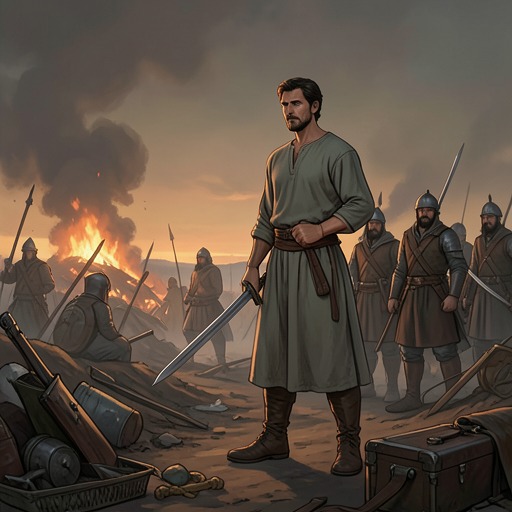
The Romance of the Three KingdomsDeng Ai’s crossing of Yinping is a bold military detour that converts Shu’s formidable mountain defenses into a route of invasion. Rather than follow the main advance under Zhong Hui, Deng Ai attempts to reach Chengdu across the rugged Heaven-Scraping mountain range. The passage takes twenty days of climbing and road-making, and its success brings the Wei army into Jiangyou with the advantage of surprise. The crossing is a turning point in the invasion: it bypasses the expected defenses and forces Shu to respond to a direct threat to its capital.
Strategic Decision and Rivalry
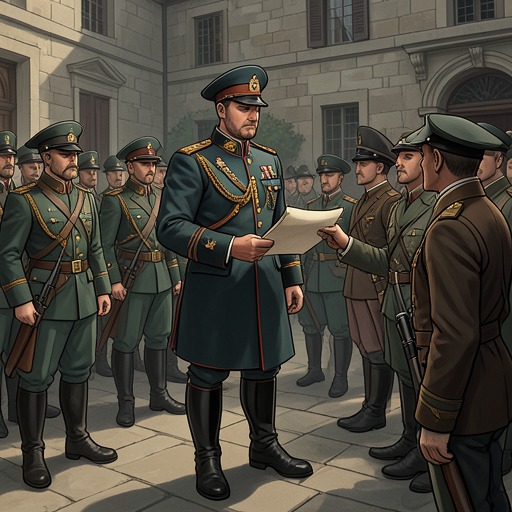
The operation follows a breakdown in cooperation between the Wei commanders. After Jiang Wei drives back Zhong Hui’s subordinate Zhuge Xu, Zhong Hui orders Zhuge Xu’s execution; only the pleas of other commanders persuade him to substitute imprisonment. Deng Ai is horrified by this treatment and resents Zhong Hui’s assumption of authority without consulting him. In their ensuing confrontation, each outwardly professes admiration for the other’s plans while privately dismissing them.
Deng Ai’s decision to cross the mountains grows out of this rivalry. He reasons that if Zhong Hui can take Hanzhong, he himself can take Chengdu and claim the glory of victory. He sets out the following day. Zhong Hui, convinced that the route makes such an attack impossible, does not regard Deng Ai’s move as a serious threat and expects him to die attempting it. The divergence is consequential: while Zhong Hui discounts the plan, Deng Ai commits to the difficult route that can bypass the defenses between the Wei army and the Shu capital.
The Mountain Crossing
The journey requires sustained preparation. Deng Ai’s men spend twenty days climbing and making a road so that supplies can follow. At the foot of Heaven-Scraping mountain, the engineers despair of finding a way across the sheer, rugged terrain. Deng Ai refuses to turn back, pointing to the distance already covered—more than four hundred miles—and asks his troops whether they will face the challenge. They agree, and the army begins its ascent.
At the summit, the route down is no less perilous. Deng Ai orders his men to slide their weapons down the cliff face. He wraps himself in his felt jacket and rolls down; his men follow his example, while those without felt use ropes and hold to trees and bushes as they descend. This is not a conventional march through a pass: the passage depends on adapting to the terrain with whatever means each soldier has available. The account emphasizes both the physical difficulty of the route and the collective resolve that enables the force to cross it.
The Stele and Its Prophecy
At the bottom of the descent, the soldiers find a stele bearing words attributed to Kong Ming. Its prediction speaks of two fires, a passing man, and two warriors whose contest will end in death. Deng Ai is astonished by the apparent foreknowledge and venerates the monument. The text thus makes the crossing more than a feat of military geography: the invaders’ arrival at the far side of the mountains appears to have been anticipated in writing by a strategist from an earlier generation.
A later verse commemorates the same passage. It describes the heights of Yinping as so steep that even a crane would hesitate, then recalls Deng Ai wrapped in felt and rolling down the mountain, astonished that Kong Ming had foreseen the event. The verse gives the crossing a retrospective, legendary shape, linking a difficult military maneuver to the motif of prophecy. Deng Ai’s achievement is presented as his own act of resolve, but the stele and poem also frame it as an episode already shadowed by Kong Ming’s foresight.
Surprise and Consequences
The unexpected approach allows the Wei army to take Jiangyou with ease. From there, reports of the advance alarm the ruler of Shu. When he asks Huang Hao about the danger, Huang Hao tells him the reports are false; the ruler asks to consult the shaman again, but she cannot be found. As further reports arrive, the court finally turns to Zhuge Zhan, Kong Ming’s son, who had previously stayed away from court because of its corruption. Summoned in the crisis, Zhuge Zhan takes command of the troops at Chengdu, and his plans begin to turn the tide.
The crossing therefore does not itself settle the invasion. Zhuge Zhan’s forces resist Deng Ai, and one Wei advance is repelled when the troops see Kong Ming’s famous carriage and mistake its appearance for a decisive sign. Deng Ai then sends Zhuge Zhan a flattering letter in an attempt to win him over; Zhuge Zhan tears it up and has the messenger executed. Only after Deng Ai uses a retreat-and-ambush strategy does he inflict a crushing defeat and advance on Mianzhu. There, Zhuge Zhan and his son Zhuge Shang lead a final attempt to break out and are killed; the city falls the next day. The route across Yinping thus opens a direct path into Shu, but the fighting at Mianzhu supplies the immediate military consequence of the breakthrough.